

















What is Trading Risk Management
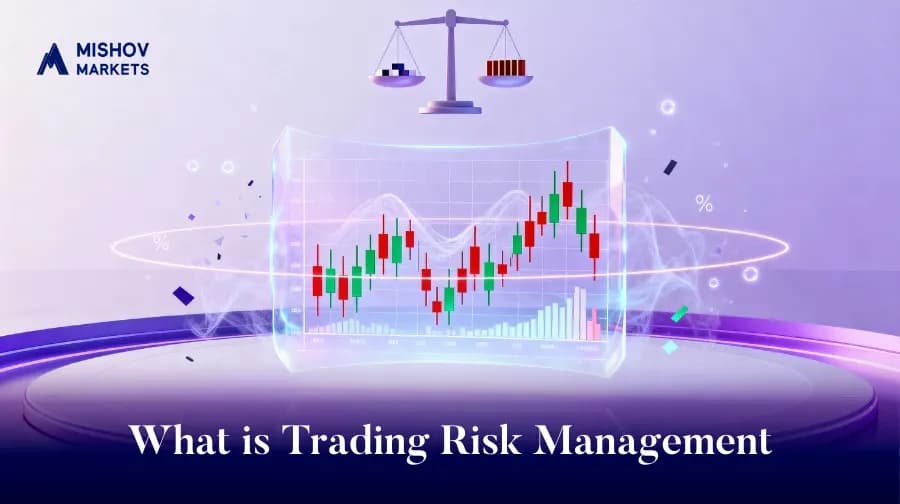
Trading risk management in Forex is a fundamental principle that every trader must prioritize. Financial markets are inherently risky, with price fluctuations and sudden market shifts that can lead to substantial losses. To navigate this environment effectively, traders need to adopt robust risk management strategies. These strategies might include setting stop-loss orders to limit potential losses, determining proper position sizes based on risk tolerance, and avoiding over-leveraging, which can amplify both gains and losses. Diversifying trades can also help spread risk across different currency pairs. Sticking to a well-defined trading plan and maintaining discipline is critical to preventing emotional trading decisions that could result in significant setbacks. Proper risk management helps protect a trader’s capital, minimize losses, and increase the probability of long-term profitability. By incorporating these practices into their trading routine, traders can weather the volatility of the Forex market and work toward consistent, sustainable success.
What is a Risk in trading?
In all the decisions we humans make, risk is involved. The only difference lies in the magnitude and proportion of these risks. Risk in Forex trading refers to the potential for financial loss that arises from market fluctuations and price volatility. It is an unavoidable trading element, influenced by sudden economic shifts, geopolitical events, or unexpected market behavior. In Forex, risk is amplified by the use of leverage, which increases both the potential gains and the potential losses. The balance between profit opportunities and exposure to loss defines the essence of risk in this market, making it a central concept for traders to understand and evaluate. No trader wants to lose their assets, but in pursuit of higher profits, sometimes bigger decisions must be made, and larger risks must be accepted. In Forex trading, this means taking calculated risks.
Overall, the greater the risk, the higher the potential reward.
Before starting a trade, you have to know some risk management strategies in trading.
What does a trading risk manager do?
You must understand that the risk of losing capital exists when you decide to execute a trade, but you can manage this risk. The best way to manage risk in Forex markets is to enhance your information and analytical skills to anticipate market changes, ideally before they occur, and base your strategy on that. As all experts in this market say, “Plan to trade, trade the plan.”
types of risk management in trading
However, you can use various tools to manage risk, such as Take Profit (T/P) and Stop Loss (S/L). This tool allows you to set the expected profit level for a currency trade, and the trade will automatically close when that level is hit. You can also set a stop loss to minimize losses if the market moves against your calculations.
Another risk management strategy in Forex trading is not to allocate all your capital to a single trade (the 1% rule). This means that while you can use your entire capital, it is prudent to risk only 1% of it on any single trade. In line with the 1% rule, another strategy is Spreading bets, this means that if you wish to risk your entire capital, it’s better to spread it across multiple trades to reduce the risk of losing your entire investment at once.
You can also try active trading, where continuous involvement in the Forex market helps you stay informed about market fluctuations. This allows you to react quickly to changes, potentially increasing your profits or minimizing the risk of losing your capital.
Offsetting is one of the best risk management strategies in trading that refers to the strategy of opening a new position to counterbalance or neutralize an existing position. This is often done to reduce or eliminate the risk associated with the original trade.
Hedging:
A common offsetting formation is hedging, where traders open an opposite position to protect against potential losses. For example, if a trader is long (buying) a currency pair and fears a decline, they might open a short (selling) position on the same pair to offset the potential loss.
The points listed below are some of the most important aspects of risk management strategies in trading that all traders and risk managers need to understand to implement a strategy effectively and achieve significant profits. These points also provide a step-by-step guide on how to apply effective risk management in trading.
How to Apply Risk Management in Trading?
- Risk-to-Reward Ratio: The risk-to-reward ratio is one of the most important risk management strategies in trading. It ensures that the potential reward outweighs the risk. A commonly recommended ratio is 1:2 or higher, meaning you should aim to make twice the amount you risk on each trade. This helps you remain profitable even with a lower win rate.
- Position Sizing: Proper position sizing ensures that you don’t risk too much of your capital on a single trade. A widely used method is the 1% rule, where you risk no more than 1% of your total capital on each trade. This helps prevent large losses that could wipe out your account. For example, if you have a $10,000 account, you would risk a maximum of $100 per trade.
- Stop-Loss Orders: Using stop-loss orders is essential for managing risk. A stop-loss automatically closes a trade if the market moves against you, limiting your losses. It ensures that you don’t lose more than a predetermined amount, helping to protect your capital. For example, you could set a stop-loss at 2% below your entry point.
- Diversification: Diversifying your trades across different assets, currency pairs, or timeframes reduces the risk of a significant loss from any single position. By spreading risk, the impact of adverse movements in one market can be offset by gains in another.
- Leverage Management: Leverage can significantly amplify both profits and losses. A strong risk management strategy in trading involves using leverage cautiously and ensuring that it is within your risk tolerance. Avoid using high leverage that could result in quick margin calls.
- Hedging: Hedging involves opening opposing positions to offset potential losses. For example, if you’re long a currency pair, you could hedge by opening a short position in a related asset to protect against adverse price movements. However, this strategy can be complex and should be used wisely.
- Trailing Stop-Loss: A trailing stop-loss moves with the market price and locks in profits as the price moves in your favor. This allows you to ride trends while protecting profits, ensuring that you don’t give back too much if the market reverses.
- Regular Monitoring and Adjustment: Continuously monitor your trades and overall strategy. Adapt your approach to changing market conditions. For example, if volatility increases, you might need to adjust your stop-loss levels or reduce position sizes to reflect the increased risk.
- Emotional Discipline: Effective risk management strategies in trading also involve emotional control. Emotional trading can lead to impulsive decisions and excessive risk-taking. Stick to your plan and avoid chasing trades driven by fear or greed.
- Trading Plan: Always have a clear trading plan before entering any trade. This plan should include your risk management strategies in trading (such as stop-loss placement, position size, and risk-to-reward ratio), along with your overall strategy and objectives.
What is the best risk management strategy for trading?
Every trader should, in a way, also be a risk manager. However, those whose job is solely risk management are expected to have the following characteristics: they must stay up-to-date, use the latest methods for capital management, incorporate both fundamental and technical analysis, and continuously engage in dynamic learning. They need to maintain communication with stakeholders to adjust their strategies according to market volatility and price fluctuations. By mastering these key aspects, traders and risk managers can enhance the effectiveness of their plans, reduce risk exposure, and improve their chances of achieving consistent and meaningful profits in the Forex market.
Importance of risk management in trading
With all these factors in mind, the importance of risk management strategy in trading becomes evident when you use all the necessary tools and understand the variables, you exit your trades with the expected profit, while many others may have suffered irreparable losses during the same time frame.