

















Unemployment Rate
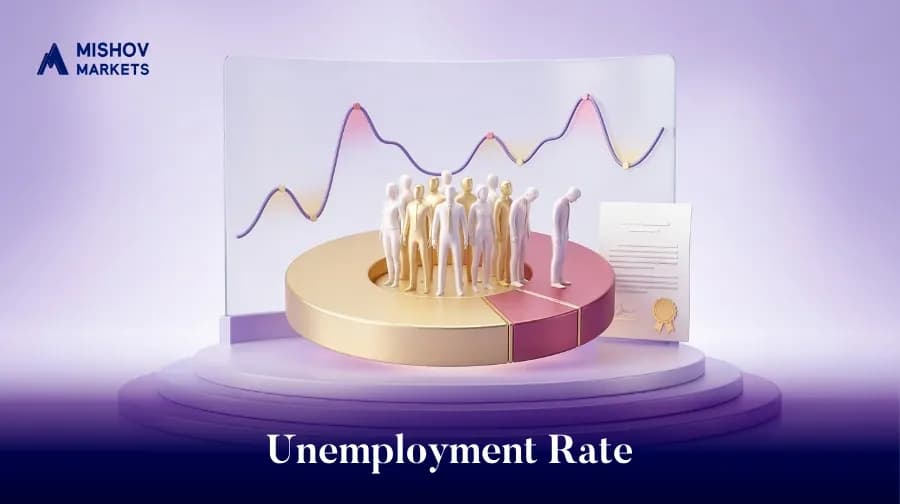
U.S. Employment Rate or Unemployment Rate: Understanding Global Unemployment Trends and Economic Impact. U.S. Employment Rate figures have long served as a barometer for economic health, investor sentiment, and government policy effectiveness. But to truly understand what this number means, we must also explore the broader topic of unemployment, how it is calculated, how it compares globally, and why it plays such a crucial role in shaping economies.
In this article, we’ll dive deep into the unemployment rate by country, the formula used to calculate unemployment, and how these figures directly affect economic cycles, interest rates, and financial markets.
Unemployment Rate by Country
While the U.S. Unemployment Rate often dominates headlines, understanding how it compares to other nations can provide deeper insights into labor market dynamics and economic resilience.
As of 2024 (according to World Bank and OECD data), here are the approximate unemployment rates in major economies:
| Country | Unemployment Rate |
| United States | 3.8% |
| Germany | 3.2% |
| United Kingdom | 4.2% |
| Canada | 5.7% |
| Japan | 2.6% |
| France | 7.1% |
| South Africa | 32.1% |
| Spain | 11.8% |
| Brazil | 7.8% |
| India | 7.3% |
These rates reflect structural differences in labor markets, education systems, social safety nets, and economic policy. For instance:
Japan maintains consistently low unemployment due to a strong manufacturing base and long-term employment culture.
Spain and South Africa struggle with high youth unemployment and informal labor markets.
The U.S. Unemployment Rate remains relatively low, signaling a tight labor market—although disparities still exist among sectors and demographics.
Real-World Example:
In 2023, while the U.S. reported low unemployment, tech-sector layoffs surged due to post-COVID restructuring. This paradox highlighted that a low national unemployment rate doesn’t always reflect sector-specific conditions.
Unemployment Rate Formula
At its core, the unemployment rate is a simple ratio that measures the portion of the labor force that is actively seeking work but unable to find it.
Unemployment Rate Formula:
Unemployment rate = (People unemployed / Labor force) × 100.
Unemployed People: Individuals without jobs who are actively seeking employment.
Labor Force: The total number of people employed + those unemployed but seeking work.
This calculation is typically done through surveys, like the U.S. Bureau of Labor Statistics’ (BLS) monthly Current Population Survey (CPS).
Important Note:
The U.S. Employment Rate is the complement of the unemployment rate. If unemployment is 3.8%, then employment is approximately 96.2%—though the exact employment-to-population ratio can vary due to changes in labor force participation.
Unemployment and the Economy
The unemployment rate is more than just a data point; it’s a real-time signal of economic momentum or distress.
1. Indicator of Economic Health
Low unemployment often correlates with strong GDP growth, consumer spending, and business confidence. Conversely, high unemployment can signal recessionary trends.
During the 2008 financial crisis, U.S. unemployment peaked at 10%, while GDP shrank by 4.3%. This led to massive stimulus efforts like the American Recovery and Reinvestment Act.
2. Influences Central Bank Policy
The Federal Reserve closely monitors the U.S. Unemployment Rate when deciding on interest rates. For example, in 2022–2023, despite rising inflation, the FOMC delayed aggressive rate hikes due to concerns about full employment recovery post-pandemic.
3. Impact on Markets and Currencies
Strong employment data usually boosts the U.S. dollar and equity markets. Traders watch monthly Non-Farm Payroll (NFP) reports for surprises. A better-than-expected employment figure can trigger rallies in USD pairs like USD/JPY or EUR/USD.
4. Social & Political Consequences
Long-term unemployment leads to income inequality, skill erosion, and social unrest. Governments face pressure to expand unemployment benefits, invest in training programs, or introduce labor reforms.
Case Study: Germany vs. U.S.
Germany’s Kurzarbeit (short-time work) program helped maintain employment during crises by subsidizing wages, allowing companies to keep workers without layoffs. The U.S. lacks a similar long-term structure, relying instead on unemployment benefits and stimulus checks during downturns.
Types of Unemployment and What They Tell Us
Understanding the U.S. Employment Rate also requires examining the different types of unemployment:
1. Frictional Unemployment: Short-term, voluntary transitions (e.g., between jobs). Always exists in a dynamic economy.
2. Structural Unemployment: Job loss due to mismatched skills or automation. For instance, coal miners are losing jobs to clean energy trends.
3. Cyclical Unemployment: Caused by economic downturns. This condition was evident during the COVID-19 lockdowns.
4. Seasonal Unemployment: Common in agriculture, tourism, or holiday retail.
An economy with only frictional unemployment is often considered to be at "full employment."
Hidden Realities Behind the U.S. Employment Rate
While the headline U.S. Unemployment Rate remains low, critics argue it doesn't always tell the full story. Two key alternative measures are:
1. U-6 Rate (Real Unemployment Rate):
Includes part-time workers seeking full-time jobs and discouraged workers who have stopped looking. As of 2024, the U-6 rate stands at around 6.9%, nearly double the official rate.
2. Labor Force Participation Rate:
Indicates what percentage of the working-age population is actually working or seeking work. After COVID, this rate fell from 63.4% to 61.6%, reflecting early retirements and childcare challenges.
Future Trends in Employment
With AI and automation advancing rapidly, many fear job displacement. McKinsey’s 2023 report estimated that up to 30% of current tasks in finance, logistics, and customer service could be automated by 2030.
Yet, history shows that while technology disrupts certain roles, it creates new ones too. The rise of the digital economy, green jobs, and remote work has transformed how employment is measured and understood.
Remote Work & Gig Economy:
More Americans are working as freelancers or remote employees, complicating traditional employment statistics. As of 2024, over 36% of the U.S. workforce engages in freelance or contract-based work.