



















Forex Correlation Explained (How to Avoid Double Risk in Trading)

Forex correlation refers to the relationship between two different currency pairs or commodities in the foreign exchange market. This relationship can be defined more formally as a statistical measure that shows how closely the values of these currency pairs move together. It is essential to understand that this correlation can be classified into two main categories. When both currencies experience an increase in value simultaneously, this situation is known as a positive correlation. Traders may find this pattern useful when making trading decisions. On the other hand, when both currency pairs decline in value at the same time, this situation is referred to as a negative correlation. Recognizing these patterns is crucial for traders. The impact of currency correlation on forex trading is significant. It influences trading outcomes and helps traders assess the level of risk they face in the market. By understanding how different currency pairs interact, traders can make informed choices that align with their trading strategies.
Hence, it is vital for traders to continuously monitor currency correlations. They have to keep an eye on these relationships to manage risks effectively and optimize their trading results. Understanding forex correlation is not just an option; it is a requirement to have successful trading in the foreign exchange market. Consider the following scenario: a trader purchases two different currency pairs that are negatively linked. As a common hedging tactic, the profits in one could be balanced by losses in the other. Since both trades will result in a loss or a profit, purchasing two correlated pairs may increase the risk and profit possibilities. Because the pairs go in the same direction, they are not entirely autonomous.
Correlation Coefficient
According to the definition given above, a forex correlation is the relationship—whether positive or negative—between trading items in the FX market that enables traders to more accurately assess the risk of a combination of positions. Then the correlation coefficient assists in assessing the extent to which the correlation is strong or weak. The coefficient of two correlated currency pairings or commodity currency pairs will be close to 100 if they move in the same direction; it will be -100 if they move in opposite directions. The fluctuations of the two currency pairings and/or commodity currency pair are unrelated when the correlation is zero. Here's a more detailed explanation: anything in the positive range of 100 indicates that the pairings go in the same direction and almost exactly the same way the other is in. negative range of -100 which the pairs are moving in opposite directions all the time (we can say have a perfect negative correlation) and the last one is both pairs' correlation coefficients are close to zero, there is little to no noticeable relationship between them.
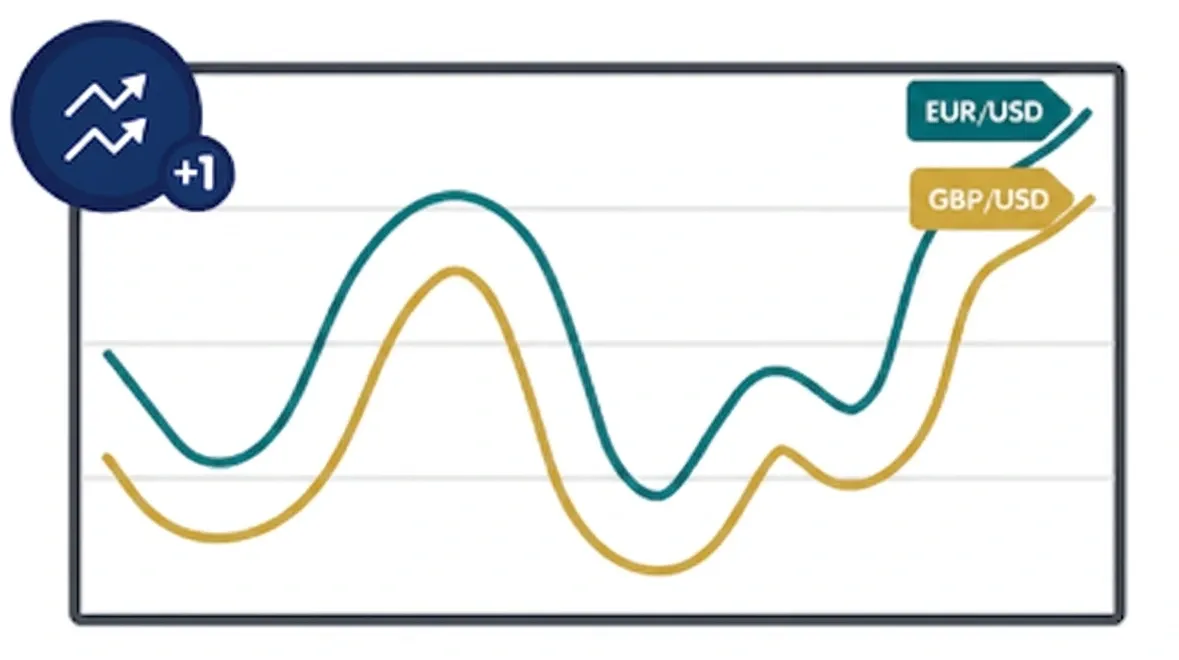
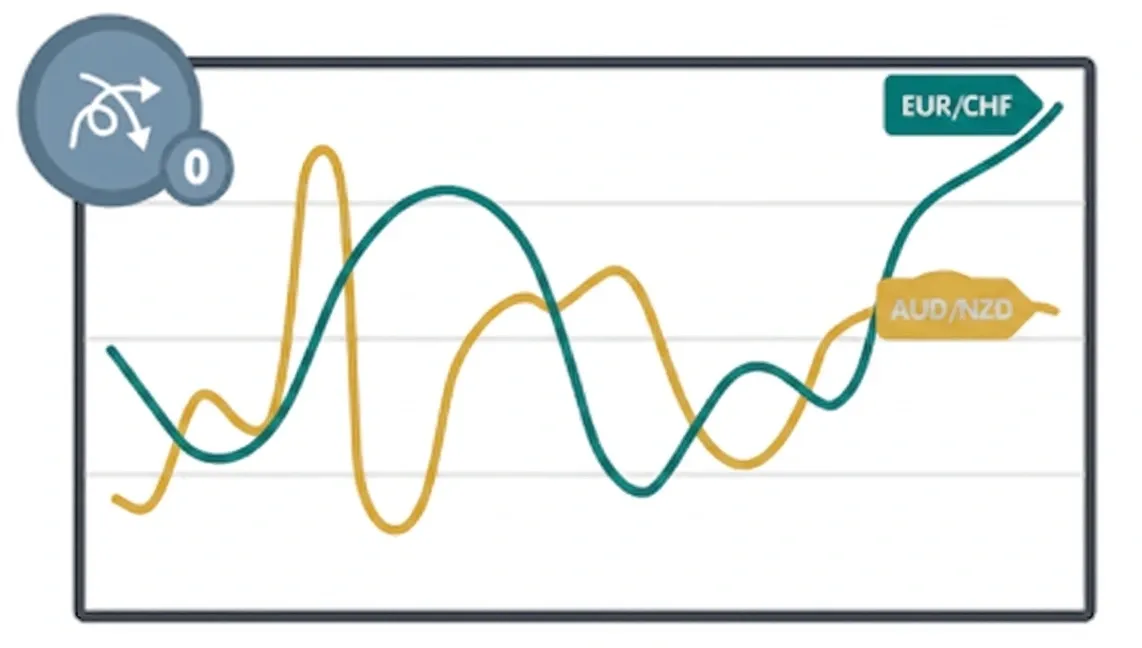
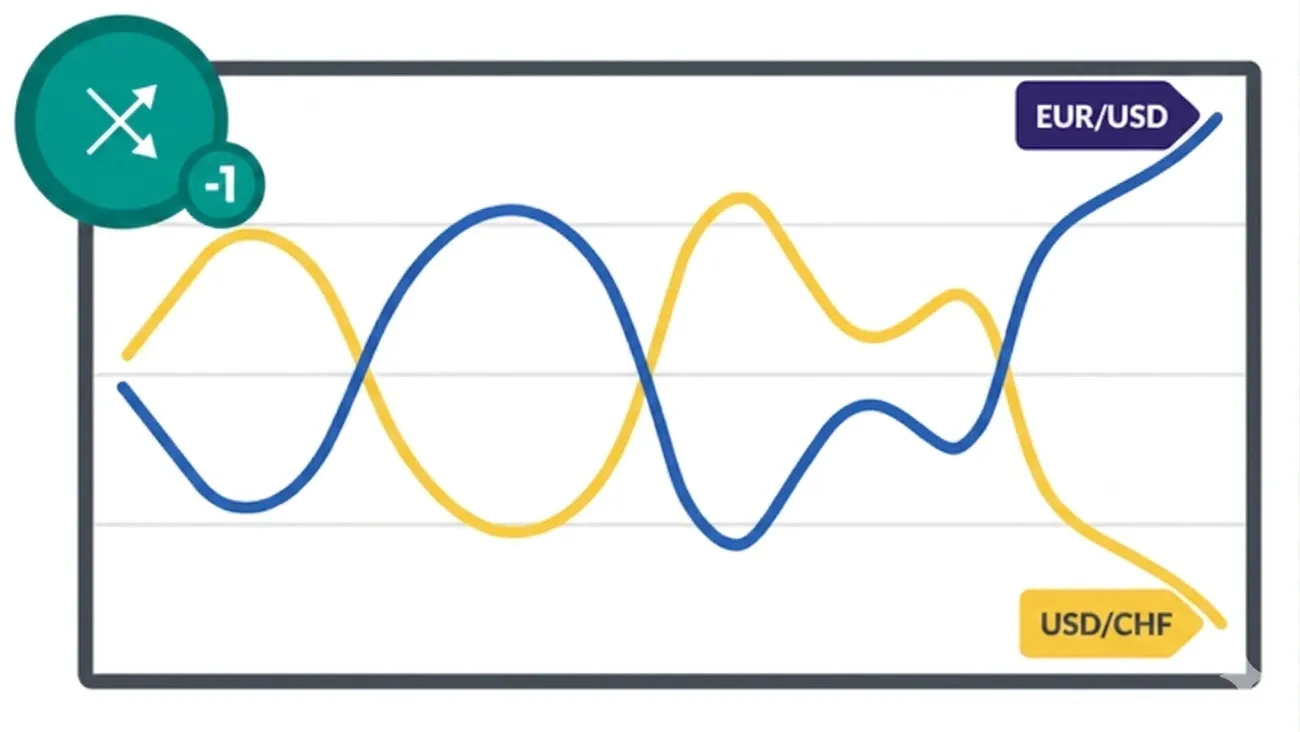
Forex correlation trading provides traders with a strategy to manage market risks and enhance profits. By opening multiple positions in the forex market, traders can create a balance in their portfolios. This approach involves selecting pairs with low or negative correlations. Such choices help to minimize overall risk.
When one currency pair loses value, the other pair may either increase in value or remain stable. This balance can protect traders from significant losses. In scenarios where traders have several open positions, a major market event can impact the entire portfolio negatively. However, correlation trading helps to reduce this risk. Traders can also benefit when a single deal has a significant rising trend. A positively correlated transaction may offer similar chances, allowing traders to profit from favorable market fluctuations. Furthermore, opening a trade on a negatively correlated pair can serve as a hedge. This means it can compensate for any losses from other trades. Using this strategy, traders can moderate the effects of adverse price changes. Overall, correlation trading is a defensive approach that helps traders manage the complexity of the Forex market more efficiently.
Forex Correlation Pairs
Two of the most well-known currency pairs that have an association with one another are the euro to dollar (EUR/USD) versus the dollar to Swiss franc (USD/CHF) pair. Because the Swiss Franc has historically moved in a manner that is comparable to the Euro, and because both of these currencies move in opposing directions when they are matched against the United States Dollar, these have a strong negative correlation (about -0.95). Due to the fact that the Swiss National Bank frequently aligns its monetary policy with the European Central Bank, this correlation continues to be rather stable.
The other example that has a positive correlation is AUD/USD and NZD/USD, with a correlation of approximately +0.95, attributable to the commodity-based nature of both Australia and New Zealand's economies, their shared trading partners, particularly China, and the alignment of their economic cycles. Both currencies are classified as "risk currencies," exhibiting similar responses to global risk sentiment.
Commodity Correlations
Prices of commodities also have a relation with currency pairs; for instance, the Australian dollar to the United States dollar (AUD/USD) and copper prices often display a strong positive correlation. This is because Australia plays a large role in the global copper exports and mining industry. Due to the fact that Australia is one of the greatest copper producers in the world, the stability of its economy is tightly connected to the price of copper, which in turn has a direct impact on the value of its currency. In most cases, an increase in copper prices is indicative of robust industrial demand and expansion of the global economy. This, in turn, tends to strengthen the Australian dollar in comparison to the United States dollar.
The United States Dollar and gold continue to exhibit a high negative correlation, which indicates that they frequently move in opposite ways. This inverse link exists due to the fact that gold is valued in US dollars worldwide. As a result, as the dollar falls, gold becomes cheaper for holders of other currencies, which in turn increases demand and drives up gold prices. On the other hand, when the US dollar strengthens, gold becomes more expensive for buyers from other countries, which may result in a decrease in demand along with a subsequent decrease in gold prices.