

















Balance Sheet
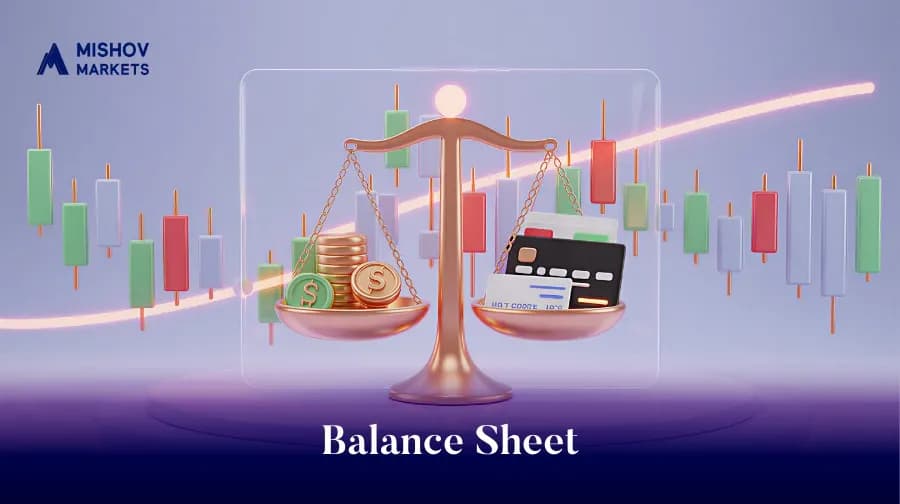
Fed’s balance sheet serves as a vital tool in understanding the financial health of any economy. In the vibrant city of Econoville, a seasoned economist named Dr. Mishov exemplified this principle. Renowned for his profound insights into economic theories and his talent for simplifying intricate ideas, Dr. Mishov was frequently sought after for his expertise in financial matters. Among the many topics he illuminated, the Federal Reserve's balance sheet stood out as a crucial element in guiding the city's economic decisions. Imagine the Fed as the central bank of our wonderful city, Econoville. Just like any business or household, the Fed keeps a balance sheet to track what it owns and what it owes. This balance sheet is crucial because it helps the Fed manage our economy, especially during times of trouble.
What is a Balance Sheet?
Dr. Mishov explained that a balance sheet is a financial statement that shows two main things:
1. Assets: What the Fed owns.
2. Liabilities: What the Fed owes to others.
Think of it like a ledger. Dr. Mishov continued with two columns. On the left column, we list the assets, which are the valuable items held by the Fed. On the right, we have the liabilities, which are the obligations or promises the Fed has made.
Dr. Mishov Breaks Down the Fed's Assets
“Now, let's discuss the assets,” Dr. Mishov said as he pointed to the left side of the imaginary ledger.
-
U.S. Treasury Bonds: One of the most important assets the Fed owns is U.S. Treasury bonds. These are essentially loans that the Fed has given to the government, and in return, the government promises to pay back the money with interest.
-
Mortgage-Backed Securities (MBS): Another key asset is mortgage-backed securities. These are collections of home loans bundled together. When homeowners make their mortgage payments, part of that money goes to the Fed.
These assets generate income for the Fed, and they also give the Fed tools to influence the economy. For example, by buying more Treasury bonds, the Fed can inject more money into the economy, helping businesses and people during tough times.
Understanding the Fed's Liabilities
Next, Dr. Mishov turned to the right side of the ledger, where the liabilities were listed.
Bank Reserves: One of the biggest liabilities is the reserves that commercial banks in Econoville keep with the Fed. These reserves are like the banks’ savings accounts at the Fed. When the Fed buys assets, it often pays for them by increasing these reserves.
Currency in Circulation: Another major liability is the currency we use every day, the dollar bills and coins in our pockets. This currency is considered a liability because it represents a promise by the Fed to the bearer that the money has value.
Central Banks Role in Expanding the Balance Sheet
Years ago, during a major economic downturn in Econoville, Dr. Mishov was the chief advisor to the Fed. The economy was slowing down, businesses were struggling, and unemployment was rising. Dr. Mishov knew that the Fed needed to act quickly to prevent a deeper recession.
Dr. Mishov advised that we need to expand the balance sheet, which means increasing the assets by buying more Treasury bonds and mortgage-backed securities. In doing so, we’ll also increase the reserves of the banks, providing them with more money to lend to businesses and consumers.
The Fed followed Dr. Mishov’s advice, and soon the balance sheet began to grow. The Fed purchased a significant amount of Treasury bonds and mortgage-backed securities, which increased the asset side of the balance sheet. To pay for these purchases, the Fed credited the reserves of banks, expanding the liabilities side as well.
The Outcome
As a result of these actions, the economy of Econoville began to stabilize. Banks had more money to lend, interest rates fell, and businesses started investing again. “By expanding the balance sheet, we were able to pump more money into the economy, helping to create jobs and support growth." Dr. Mishov explained to the citizens.
The Balance Sheet as a Tool
Dr. Mishov emphasized that the balance sheet is not just a record-keeping tool but a powerful instrument the Fed uses to manage the economy.
When the economy is weak, the Fed can expand its balance sheet to support growth. Conversely, when the economy is strong and inflation is a concern, the Fed can shrink its balance sheet to pull back some of that support.
Dr. Mishov’s explanation helped the citizens of Econoville understand the importance of the Fed's balance sheet. They realized that it was more than just numbers on a page; it was a vital tool that helped keep their city’s economy on track.
The balance sheet is like the heart of the central banks. By expanding and contracting it as needed, we can ensure the steady flow of economic life throughout Econoville, keeping our city healthy and prosperous.
Balance Sheet Components
A balance sheet is a financial document that outlines a company's assets, liabilities, and equity held by shareholders at a particular moment. It serves as a foundation for calculating investor returns and assessing the company's financial structure. Essentially, the balance sheet offers a concise overview of what the company possesses and what it owes, along with the total investment from shareholders. This document can be analyzed alongside other key financial statements, which can be used to perform fundamental analysis or derive financial ratios.
The balance sheet is structured with assets on the left-hand side and liabilities and shareholders' equity on the right. For an item to be an asset, it must have been acquired in the past and have the potential to generate a quantifiable economic benefit in the future. Liabilities are obligations acquired in the past that require economic sacrifices in the future. What remains for the company's owners (shareholders) is the difference between its assets and liabilities; This surplus is called shareholders' equity.
This equation leads us to one of the fundamental identities of accounting:
Assets = Liabilities + Shareholders' equity
In other words, a company's assets are either things it owns (shareholders' equity) or items that it has to pay back (liabilities). The term "balance sheet" comes from the fact that the totals on each side must match.
Double-entry bookkeeping is a method that keeps the two sides of the balance sheet equal by recording the company's assets and liabilities. You can't just add one item to the balance sheet by itself; there has to be an equal and opposite change somewhere else to keep things balanced. This entry that cancels out can be an equal addition to the other side of the balance sheet or a decrease in something else on the same side.
Providing an example is the best way to illustrate this concept. Think about a new business that hasn't opened yet and only has $1,000 in cash from its founders as an asset.
The company’s balance sheet looks quite simple:
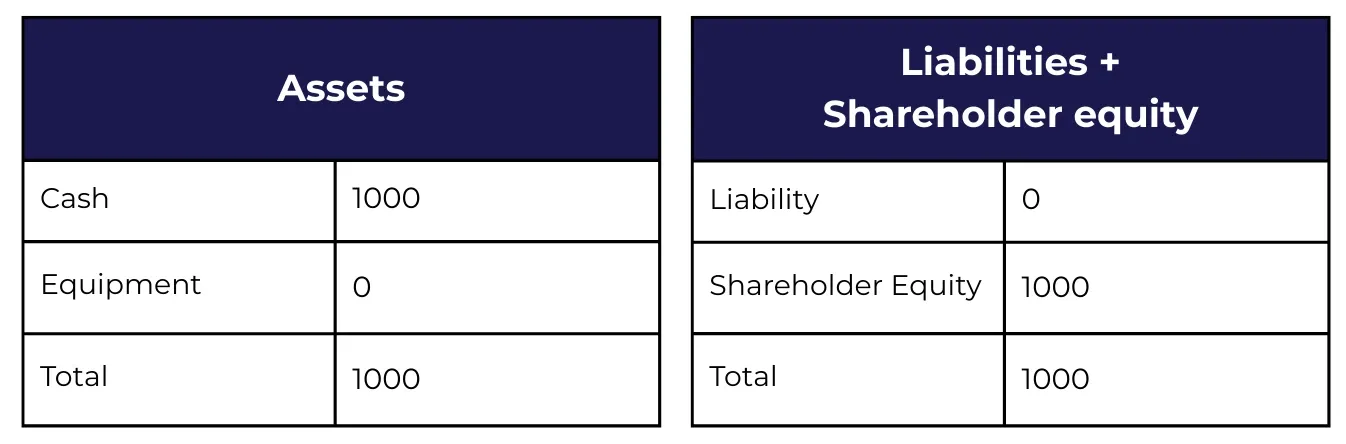
The business now buys a piece of equipment for $600. The management can pay for it with their own money, a loan, or more money from the owners. The balance sheet shows the three approaches in different ways, but each one needs two entries:
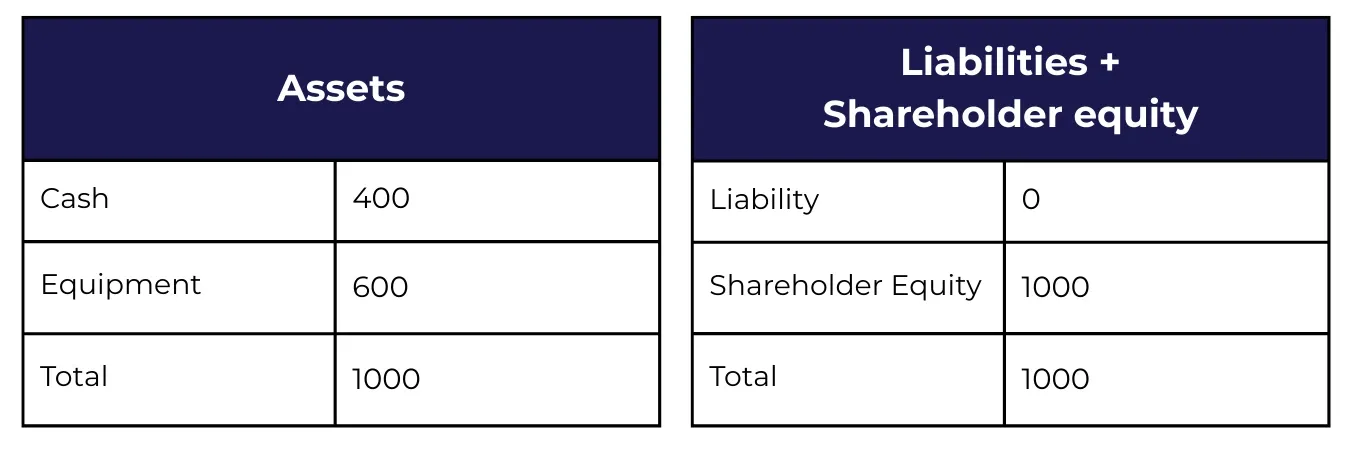
When you pay with cash, the left side of the balance sheet gets two equal and opposite changes. The cash line goes down by $600, and the equipment line goes up by the same amount. The company's assets have changed from cash to machines.
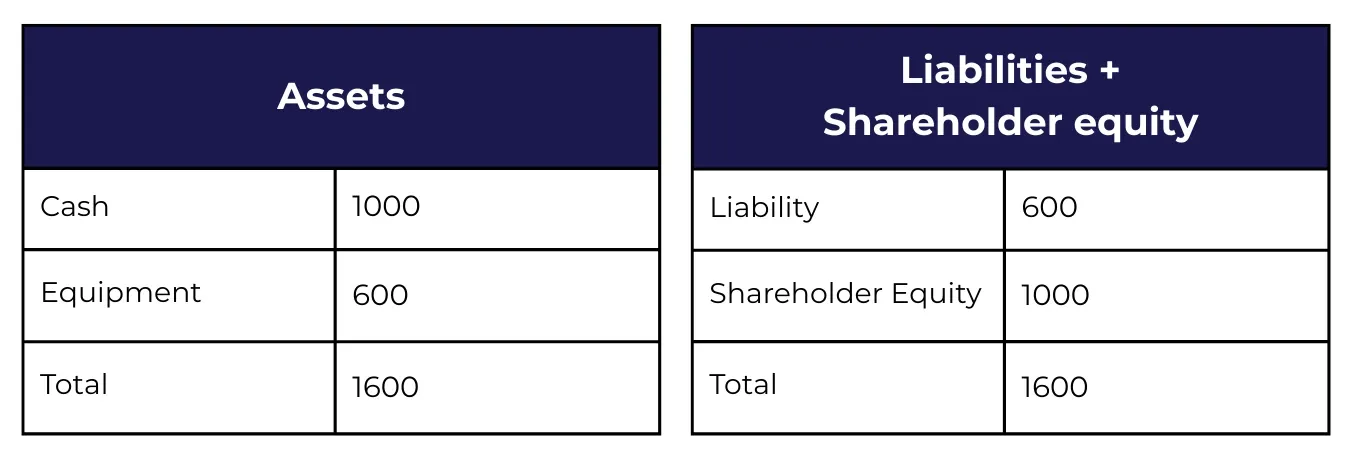
Pay with borrowed money: If you buy the machine with borrowed money (credit), the $600 added to the equipment line on the left side would be balanced by an increase in the company's liabilities (the borrowed money) on the right side. This also makes the balance sheet bigger, going from $1,000 on each side to $1,600. (The borrowed money has now added to the balance sheet.)
Owners can pay more: The third option is for business owners to pay more for the machine. In this case, the $600 added to the equipment line is balanced out by adding $600 to the shareholders' equity. The balance sheet goes up from $1,000 to $1,600, but there is no leverage.
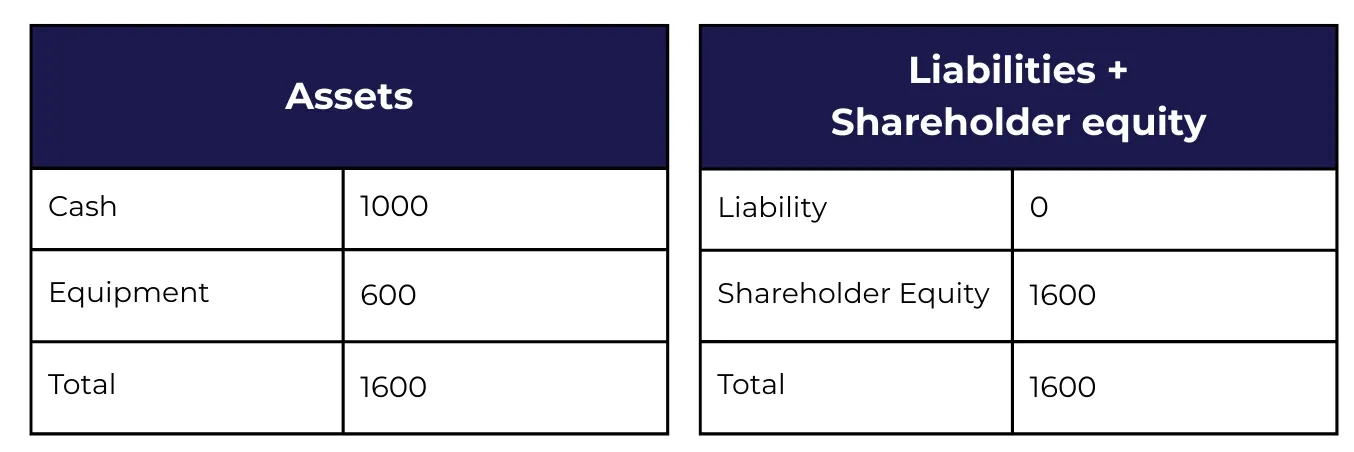
There are always two entries on the balance sheet: one for the change in assets and one for how it was paid for, or if it belongs to the owners of the company or the creditors.